2026 edition · Amazon US ratings and owner reviews
The best mattress for side sleepers, judged on what owners report
Sleeping on your side puts your whole body weight through two narrow points — the shoulder and the hip — so the thing that decides how you feel at 7am is how far those points can sink before the mattress pushes back. Almost every buying guide answers that with "medium-firm", which is why so many side sleepers wake with a dead arm. This list is weighted towards evidence instead: every pick is a current Amazon US listing rated 4.0 stars or higher, ranked with the depth of its review base taken seriously, and cross-checked against the sleep threads on Reddit where shoulder pain, hips sinking too far and week-one regret actually get discussed. Six made the list, from a genuinely plush 12-inch foam bed to a cool-sleeping hybrid and the cheapest credible way off a mattress that has already collapsed.
Lucid 12" Plush Gel Memory Foam Mattress— Three and a half inches of plush comfort foam is enough for a shoulder to actually sink, and it is the one listing here written for side sleepers rather than adapted to them.
Zinus 12-Inch Cloud Memory Foam Mattress— The plushest surface on the page, which is what lighter side sleepers need before a mattress will contour around them at all.
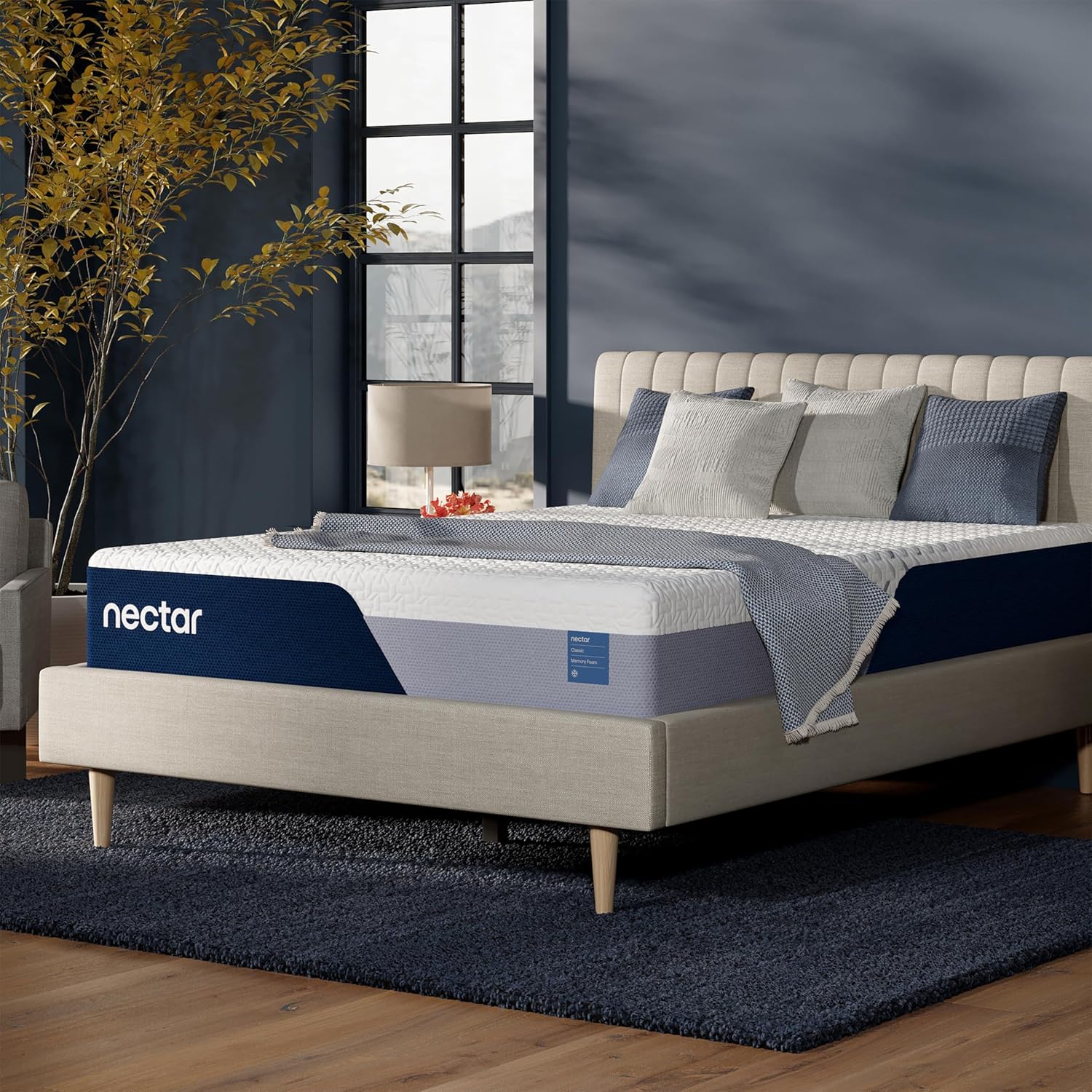
Nectar 12-Inch Memory Foam Mattress— A 365-night trial, which is the only realistic way to find out whether a firmness level suits your shoulder over a full year of seasons.
Zinus 12-Inch Green Tea Memory Foam Mattress— The biggest review base in the whole category and enough contouring foam to get a side sleeper off a mattress that has already collapsed.
Why it wins: Three and a half inches of plush comfort foam is enough for a shoulder to actually sink, and it is the one listing here written for side sleepers rather than adapted to them.
Lucid · Medium plush · 12 inches
Mid-rangeMemory foamMedium plush
4.4(8,800+ ratings)4.4 out of 5 stars on Amazon
Our score 9.0/10
Best for: Most side sleepers of average weight who wake with a sore shoulder or a numb arm
Side sleeping puts your entire body weight through two narrow contact points — the shoulder and the hip — so the thing that decides whether you wake up sore is how much soft material sits above the support core. This one has 3.5 inches of it: three inches of gel-infused memory foam over a 1.5-inch transition layer, sitting on a 7.5-inch high-density base. That is a genuinely deep comfort layer at this price, and it means the shoulder can drop far enough for your spine to stay straight instead of being pushed into a sideways kink. The gel and bamboo-charcoal infusion also takes the edge off the heat that plush foam usually traps. It holds 4.4 stars, and the plush feel is exactly what the happy reviews describe.
Pros
3.5in comfort layer is deep enough for a shoulder to sink properly
Medium plush is the feel most side sleepers actually need, not medium-firm
Gel and bamboo charcoal keep a plush foam bed from sleeping hot
Excellent motion isolation, so a restless partner does not wake you
Cons
Too soft for stomach sleepers and heavier back sleepers
All-foam, so the edges give way if you sit on the side to dress
Plush foam softens faster than a firm build under sleepers over ~250 lb
What owners actually say: The repeated phrase from owners is that it hugs rather than pushes back, and side sleepers who moved off a firm bed describe shoulder pain going away within a couple of weeks. The other consistent note is that anyone who sleeps mainly on their stomach finds it too soft, which is the honest trade-off of a plush build.
Ready to look at the Lucid? Prices move weekly on Amazon.
Modway Jenna 10" Innerspring and Memory Foam Mattress
Why it wins: A quilted pillow-top over pocketed coils gives the shoulder somewhere to go while the hip still gets pushed back, and it is the coolest-sleeping pick here.
Modway · Medium · 10 inches
BudgetHybridMedium
4.5(1,600+ ratings)4.5 out of 5 stars on Amazon
Our score 8.8/10
Best for: Side sleepers who run hot, or who hate the sinking feeling of all-foam beds
The usual complaint about plush foam is heat, and the usual complaint about coil beds is that they are too hard on the shoulder. This is the middle path: individually wrapped pocket coils under a quilted pillow-top, so air moves through the support layer while the padded surface still lets the shoulder settle. Because the coils are pocketed rather than linked, they compress independently under the hip and stay firmer under the waist, which is what keeps the spine level rather than banana-shaped. It holds the highest star rating on this page at 4.5, and it is the cheapest credible hybrid we would put a side sleeper on.
Pros
Pocketed coils support the hip while the pillow-top absorbs the shoulder
Best-rated pick here at 4.5 stars
Airflow through the coil layer means it sleeps noticeably cooler than foam
Easy to change position on, which suits combination sleepers
Cons
10 inches is thin, so sleepers over ~230 lb should look at a deeper bed
Transfers more partner movement than the memory foam picks
Coil beds can develop faint noise years down the line
What owners actually say: Owners consistently describe it as cooler and easier to roll over on than memory foam, and combination sleepers who switch between side and back rate it highest. The recurring criticism is the 10-inch profile — it is thinner than a modern hybrid, and heavier sleepers say they can feel the coils sooner than they would on a 12-inch bed.
Ready to look at the Modway? Prices move weekly on Amazon.
Why it wins: The plushest surface on the page, which is what lighter side sleepers need before a mattress will contour around them at all.
Zinus · Plush · 12 inches
Mid-rangeMemory foamPlush
4.4(18,000+ ratings)4.4 out of 5 stars on Amazon
Our score 8.6/10
Best for: Lighter side sleepers, under roughly 150 lb, who find most beds feel like a floor
Firmness is relative to body weight, and that trips up lighter sleepers constantly: if you do not weigh enough to compress the comfort layer, even a medium-firm bed behaves like a plank and your shoulder takes the whole load. Zinus built the Cloud as its plushest foam bed — cradling memory foam under a plush microfibre quilted surface — so it starts contouring under much less pressure. Over 18,000 ratings at 4.4 stars make it the deepest evidence base for a genuinely soft bed on Amazon rather than a medium-firm one described as soft.
Pros
Genuinely plush rather than medium-firm-marketed-as-soft
18,000+ ratings holding 4.4 stars
Contours under low body weight, so lighter sleepers get real pressure relief
Excellent motion isolation
Cons
Too soft for average and heavier sleepers, whose hips sink out of line
Plush microfibre surface holds more heat than the hybrid pick
Needs 24 to 72 hours to expand before it feels like the finished product
What owners actually say: Lighter sleepers and pregnant side sleepers are the people who rate this highest, and the words that come up are cushioned and cloudy. The flip side appears just as often: average-to-heavy sleepers say they sink too far and their hips drop, so this is a body-weight-specific pick rather than a universal one.
Ready to look at the Zinus? Prices move weekly on Amazon.
Sweetnight Clarity 12-Inch Gel Memory Foam Mattress
Why it wins: Two firmness levels in one mattress, so if the soft side lets your hips drop you flip it instead of returning it.
Sweetnight · Soft one side, medium-firm the other · 12 inches
Mid-rangeMemory foamSoft one side, medium-firm the other
4.2(4,200+ ratings)4.2 out of 5 stars on Amazon
Our score 8.4/10
Best for: Anyone unsure how soft they need, and couples where one person sleeps on their side and the other does not
The hardest part of buying for side sleeping is that nobody knows their own firmness preference until they have slept on it for a fortnight. This one answers that directly: the top surface is gel-infused memory foam tuned soft for pressure relief at the shoulder and hip, and the underside is high-density foam that behaves medium-firm. If the soft side leaves your lower back aching, you flip the mattress over rather than packing it back into a box. It carries 4.2 stars across more than 4,200 ratings, which is a solid sample for a flippable design.
Pros
Two genuinely different firmness levels in one mattress
Gel-infused soft side is aimed squarely at shoulder and hip pressure
Removes most of the guesswork if you are unsure how plush you need
Strong motion isolation on both sides
Cons
Heavy and awkward to flip without a second person
Lowest star rating among our top four picks
Neither side is as plush as the dedicated soft pick above
What owners actually say: The flip feature is what owners bring up first, and several say they landed on the firmer side after a week of trying both — proof that the option earns its keep. The most common complaint is weight: a 12-inch flippable queen is heavy and awkward to turn over on your own.
Ready to look at the Sweetnight? Prices move weekly on Amazon.
Why it wins: A 365-night trial, which is the only realistic way to find out whether a firmness level suits your shoulder over a full year of seasons.
Nectar · Medium firm · 12 inches
PremiumMemory foamMedium firm
4.3(1,400+ ratings)4.3 out of 5 stars on Amazon
Our score 8.3/10
Best for: Combination sleepers who start on their side and roll onto their back, and anyone who wants a long safety net
This is the pick for people who move around at night. Nectar's build is medium firm rather than plush, with a contouring memory foam layer under a cooling cover, so the shoulder gets some give without the hip dropping when you roll onto your back at 3am. What sets it apart is the 365-night trial and the brand behind it: you get a full year, including a hot summer and a cold winter, to judge whether the firmness actually suits you. It sits at 4.3 stars on a smaller sample than our top picks, which is why it ranks fifth rather than higher.
Pros
365-night trial gives a full year to judge the firmness
Established brand with real warranty support behind it
Cooling cover helps a foam bed shed heat
Cons
Medium firm, so dedicated side sleepers may want the plusher picks
Smaller Amazon review sample than the top three
Priciest option on this page
What owners actually say: Owners repeatedly say it took two to three weeks before their mornings changed, which is the exact reason short return windows produce so many false negatives. The most consistent criticism is that strict side sleepers find it firmer than they expected — it is a medium firm bed, and it does not pretend otherwise.
Ready to look at the Nectar? Prices move weekly on Amazon.
Why it wins: The biggest review base in the whole category and enough contouring foam to get a side sleeper off a mattress that has already collapsed.
Zinus · Medium · 12 inches
BudgetMemory foamMedium
4.2(47,000+ ratings)4.2 out of 5 stars on Amazon
Our score 8.0/10
Best for: Tight budgets, guest rooms, and anyone who needs off a sagging mattress this week
Nothing else in this category has a review base like this one, and that counts for a lot when you are spending as little as possible. The three-layer green tea and charcoal infused foam contours around the shoulder and hip properly, and the patented contour support layer above the dense base is there to stop the swallowed-by-the-mattress feeling that cheap foam usually produces. It is a medium feel rather than a plush one, so it is not the ideal specification for a strict side sleeper — but replacing a mattress with a visible dip in it is the single biggest improvement most people ever feel, and this is the cheapest sensible way to do that.
Pros
Enormous review base — the most-reviewed foam mattress in the category
Contour support layer limits the sinking feeling cheap foam usually has
Green tea and charcoal infusion keeps odour down over the years
Cheapest credible escape from a sagging mattress
Cons
Medium rather than plush, so it is a compromise for strict side sleeping
Noticeable new-foam smell for the first 24 to 72 hours
Softens sooner under heavier sleepers than the pricier picks
What owners actually say: The long-running verdict is that it dramatically beats a worn-out mattress and does not compete with a premium one. Two cautions recur: the green tea smell is strong for the first day or two, and sleepers over roughly 230 lb say it softens sooner than they hoped.
Ready to look at the Zinus? Prices move weekly on Amazon.
Firmness labels are manufacturer-stated and are not standardised across brands — the same word can feel a level apart between two beds, and your body weight shifts it again. For side sleeping, the two rows that matter most are comfort layer and shoulder relief: that is what decides whether your shoulder sinks or gets propped up. Tap a card to check current pricing on Amazon.
Our score isn't the Amazon star rating. Stars measure how happy buyers were on the day they reviewed — often marked down for a delivery problem or a first week that felt wrong. Our score weighs how well a mattress suits side sleeping specifically, how deep the review base is, long-term durability and value. That's why a 4.2-star mattress with 47,000 ratings can still earn a place, and a high rating on a tiny sample doesn't automatically top the list.
Nothing here is medical advice. If shoulder or hip pain is severe, persistent, or comes with numbness or weakness, a mattress is not the first thing to change — see a clinician.
Comfort layer before everything else
For side sleeping, the depth and softness of the material above the support core decides whether your shoulder sinks or gets propped up. We ranked on that first, and treated headline firmness labels as marketing rather than measurement.
Nothing under 4.0 stars
Anything rated below 4.0 was cut regardless of specification — including some well-known names. In this category a low rating almost always means sagging, bottoming out or a support core that failed early.
Plush bias, deliberately
Most mattress guides default to medium-firm, which is the wrong answer for a dedicated side sleeper. Picks here cluster around medium plush to medium, with a genuinely soft option for lighter sleepers and a medium-firm one for people who roll onto their back.
Owner threads, not press copy
We read the long-term complaints — dead arms, hips sinking too far, off-gassing, edge collapse, heavier sleepers bottoming out on 10-inch beds — and those went straight into the cons rather than being quietly left out.
Plush foam vs hybrid: the decision that decides your shoulder
Ignore cover fabrics and marketing names for a moment. As a side sleeper, the only question that matters is how far your shoulder can travel before something stops it. Plush memory foam lets the shoulder sink and closes around it; a pillow-top hybrid lets it settle a little less far but pushes back harder under your hip. If you wake with a sore shoulder or a dead arm, go plusher foam. If you wake hot, or change position all night, go hybrid.
The mattress is usually the whole bill with a bed-in-a-box, but a few things around it catch side sleepers out — especially the pillow, and the base underneath, which quietly ruins good mattresses. Typical US ranges:
A sound base — $0 to $200
Free if you already have a solid platform or slats closer than about three inches apart. If your slats are wider than that, or the old box spring sags, a bunkie board or slat set is essential — the mattress copies whatever shape is under it.
Mattress protector — $25 to $60
Almost every warranty is voided by staining, so this is cheap insurance rather than an upsell. A breathable one also stops foam beds trapping quite as much heat.
Pillow — $30 to $120
Changing mattress firmness changes how far your shoulders sink, which changes the pillow height your neck needs. Plenty of people fix a new-mattress neck ache with a different pillow, not a return.
Old mattress disposal — $0 to $100
Kerbside collection is free in some areas and a paid bulky-waste booking in others. Worth checking before delivery day so the old one is not blocking the hallway.
Topper, only if needed — $60 to $200
Useful for softening a mattress that turned out slightly too firm for a side sleeper. It cannot rescue a bed that sags, so treat it as fine-tuning rather than a fix.
Lifespan — 8 to 10 years
Spread over that lifetime, even the pricier picks here work out to a low cost per night. Budget foam under a heavier sleeper is the exception and should be expected to need replacing sooner.
Not sure yet?
If you genuinely cannot predict how plush you need, the long-trial pick gives you a full year to decide, and the flippable pick lets you change the feel without returning anything. If budget is the constraint, the cheapest pick still gets you off a collapsed mattress today.
Softer than most guides suggest. Side sleeping funnels your whole body weight through two narrow points — the shoulder and the hip — so those points need to sink far enough for your spine to stay in a straight line. Medium plush to medium is the range that works for most people. A firm mattress leaves the shoulder propped up and the waist unsupported, which is where the ache in your upper arm and lower back comes from.
Why does my shoulder hurt when I sleep on my side?
Almost always because the comfort layer is too thin or too firm to let the shoulder joint drop into the mattress. Your shoulder is the widest, boniest part of your body in that position, so if the surface pushes back instead of giving way, the joint is compressed all night. The fix is more soft material above the support core — which is exactly why the top pick here has a 3.5-inch comfort layer rather than the usual two.
Memory foam or hybrid for side sleeping?
Memory foam contours further, so it is the safer default for a dedicated side sleeper and for anyone with shoulder or hip pain. A hybrid is better if you sleep hot, if you roll between side and back through the night, or if you dislike the sinking feeling of foam — pocketed coils still let the shoulder settle while pushing back under the hip. Both are on this page for that reason.
Does my body weight change which one I should buy?
More than anything else on the spec sheet. The same mattress feels roughly a firmness level softer to a heavier sleeper and a level firmer to a lighter one. Under about 150 lb, go plusher — a medium-firm bed will feel like a floor and your shoulder takes the load. Over about 230 lb, avoid the softest option and choose a deeper 12-inch build or a hybrid, because plush foam lets your hips drop out of alignment.
Do I get numbness or pins and needles in my arm because of the mattress?
Frequently, yes. A surface too firm for side sleeping compresses the shoulder and the nerves running through it, and a dead arm at 4am is the classic symptom. Owners moving from a firm bed to a plush one report it disappearing within a couple of weeks. If numbness persists on a properly plush mattress, or comes with weakness, that is worth raising with a clinician rather than solving with bedding.
How thick should the mattress be?
Twelve inches is the sensible default for an adult side sleeper, because what matters is having enough material above the base for the shoulder to sink into. A 10-inch bed can work well under about 230 lb — the hybrid pick here is one — but heavier sleepers report bottoming out, which is the feeling of the hard support layer through the comfort layer.
What pillow height do I need as a side sleeper?
A thicker one than a back sleeper, and the mattress changes the answer. Your neck needs filling the gap between the mattress and your head, and a plusher bed lets your shoulder drop further, which increases that gap. Plenty of people fix a new-mattress neck ache by changing the pillow rather than the mattress, so budget for one.
How long before a new mattress feels right?
Two to four weeks. Compressed foam needs 24 to 72 hours just to reach full height, and your body has adapted to the shape of the old bed, so the first several nights can feel wrong even when the mattress is right. Owner reviews are full of people who nearly gave up in week one and were fine by week three.
Do these need a box spring?
No. All of them are bed-in-a-box designs built for a solid platform, slats spaced under roughly three inches apart, or an adjustable base. What they must not sit on is a sagging box spring or widely spaced slats — the mattress copies the shape underneath it, and that alone will undo the pressure relief you paid for.
Can a topper fix my current mattress instead?
If your mattress is structurally sound but simply too firm for side sleeping, a plush topper is a genuinely good and much cheaper answer. If it sags in the middle, a topper cannot help — you are still lying in the dip, just with padding on top. Check with a straight edge across the surface before spending anything.
Will a plush mattress make my back hurt?
Only if it is too plush for your weight. The failure mode is your hips sinking deeper than your shoulders, which curves the spine sideways. That is why the softest pick here is flagged for lighter sleepers, and why average and heavier side sleepers should stay with the medium-plush top pick, the hybrid, or the flippable option that lets you dial the feel back.
Which pick suits a couple where only one of us sleeps on our side?
The flippable pick is the simplest answer if you are unsure, and memory foam generally keeps the peace on movement because it absorbs a restless partner almost completely. If your firmness preferences are genuinely far apart, buy for the heavier or more pain-affected sleeper and add a plush topper on the other side.
Do these sleep hot?
Plush foam holds more heat than firm foam because more of your body is in contact with it. That is why the top pick uses gel and bamboo charcoal infusion, and why the hybrid is the coolest option here — air moves through the coil layer instead of sitting in dense foam. A breathable protector and cotton sheets make a bigger difference than most people expect.
What if I get the firmness wrong?
Check which window applies before you order, because it differs. Amazon's standard returns cover the marketplace picks here, the Nectar option carries a full 365-night trial, and the flippable pick lets you switch to a firmer surface without returning anything at all — which is the most forgiving route if you genuinely cannot predict what you need.
How often should a mattress be replaced?
Roughly every eight to ten years, and sooner for budget foam under a heavier sleeper. Age is less useful than shape: lay a straight edge across the surface, and if there is a visible dip where your hip lands, the support layer has already failed and no bedding will compensate for it.